Liquor Warehouse in India: Everything Importers Need to Know
India’s alcoholic beverage market continues to expand as global wine, whisky, vodka, gin, rum, and premium spirits brands enter the country. However, importing alcohol involves strict regulations, customs procedures, excise compliance, and specialized storage requirements. This is where a professional liquor warehouse becomes essential.
Whether you are an importer, distributor, duty-free operator, retailer, or international alcohol brand, choosing the right liquor wine warehouse can significantly improve inventory management, reduce costs, and ensure regulatory compliance.
In this guide, we explain how a liquor and wine warehouse works, the benefits of bonded warehousing, customs clearance procedures, and how logistics providers support alcohol supply chains in India.
What Is a Liquor Warehouse?
A liquor warehouse is a specialized storage facility designed to handle alcoholic beverages, including imported wines, spirits, beer, and premium liquor products. These warehouses ensure proper inventory control, secure storage, regulatory compliance, and efficient distribution.
Unlike standard warehouses, liquor storage facilities must comply with customs regulations, state excise laws, and product handling requirements.
Businesses commonly use liquor warehouses for:
- Imported liquor storage
- Wine inventory management
- Customs bonded warehousing
- Distribution and order fulfillment
- Duty-free supply chain operations
- Re-export and transshipment activities
A professional liquor warehouse helps businesses maintain product quality while ensuring compliance with applicable regulations.
Why Businesses Use a Liquor Wine Warehouse In India
A dedicated liquor wine warehouse offers several advantages over conventional storage facilities.
Enhanced Inventory Control
Alcohol importers often manage multiple SKUs, brands, and product categories. A specialized warehouse provides accurate stock tracking, batch management, and inventory visibility.
Regulatory Compliance
Alcohol products require strict compliance with customs, excise, and import regulations. Warehousing providers assist businesses in maintaining proper records and documentation.
Reduced Operational Costs
Centralized warehousing reduces transportation expenses, inventory losses, and handling inefficiencies.
Improved Distribution
A strategically located liquor warehouse enables faster deliveries to distributors, retailers, duty-free operators, and hospitality businesses.
Benefits of a Liquor and Wine Warehouse for Importers
A liquor and wine warehouse provides importers with flexibility and operational efficiency.
Key benefits include:
Secure Storage
Imported wines and spirits require safe storage to protect product quality and packaging integrity.
Better Cash Flow Management
Businesses can store products while managing inventory releases based on market demand.
Scalable Operations
As product volumes increase, warehouse capacity can be expanded without significant infrastructure investments.
Faster Market Access
Inventory stored near major ports, airports, and logistics hubs can be distributed more efficiently.
Bonded Warehouse vs Standard Liquor Warehouse
Many alcohol importers use a bonded warehouse to optimize costs and improve cash flow.
Standard Liquor Warehouse
In a standard warehouse, customs duties and taxes are generally paid before goods are stored.
Bonded Warehouse
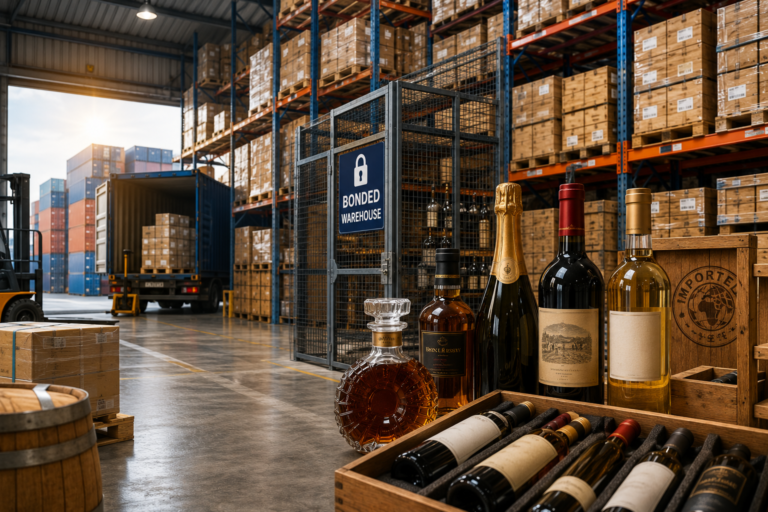
A customs bonded warehouse allows imported liquor to be stored under customs supervision before duties are paid.
Benefits include:
- Duty deferment
- Improved cash flow
- Reduced working capital requirements
- Flexible inventory management
- Easier re-export operations
Bonded warehousing is particularly beneficial for premium liquor brands, wine importers, and international alcohol distributors.
Customs Clearance for Imported Liquor
Customs clearance is one of the most critical steps in the alcohol import process.
The typical process includes:
Documentation Review
Required documents may include:
- Commercial invoice
- Packing list
- Bill of lading
- Import licenses
- Product registrations
- Regulatory approvals
Customs Assessment
Authorities verify product classification, valuation, and applicable duties.
Duty Calculation
Import duties, taxes, and applicable charges are assessed.
Cargo Release
Once customs requirements are satisfied, goods are released for warehousing and distribution.
Working with experienced customs clearance specialists helps reduce delays and compliance risks.
How FTWZ Supports Liquor Importers
A Free Trade Warehousing Zone (FTWZ) offers additional advantages for international alcohol brands.
FTWZ facilities allow businesses to:
- Store imported liquor before domestic clearance
- Consolidate shipments
- Re-export inventory
- Manage regional distribution
- Improve supply chain efficiency
For businesses importing wine, whisky, gin, vodka, and premium spirits, FTWZ facilities can provide strategic logistics benefits.
Liquor Warehouse Solutions for International Alcohol Brands
Global alcohol brands entering the Indian market require specialized warehousing and logistics support.
A professional alcohol warehousing solution can assist with:
- Inventory management
- Customs clearance coordination
- Bonded storage
- Distribution planning
- Regulatory compliance
- Re-export logistics
- Supply chain optimization
These services help international brands establish efficient operations while minimizing logistical challenges.
Factors to Consider When Choosing a Liquor Warehouse
Selecting the right warehouse partner is critical for long-term success.
Consider the following factors:
Location
Choose facilities near ports, airports, FTWZ zones, and major distribution centers.
Compliance Expertise
Verify experience with customs clearance, bonded warehousing, and excise regulations.
Security Standards
Ensure robust security measures and inventory monitoring systems are in place.
Technology Integration
Modern warehouse management systems improve inventory visibility and operational efficiency.
Scalability
The facility should accommodate future business growth and seasonal demand fluctuations.
Future Trends in Liquor Warehousing
The alcohol logistics sector continues to evolve with technological advancements and increasing demand.
Emerging trends include:
- Smart warehouse management systems
- Real-time inventory tracking
- Automated compliance reporting
- Integrated customs clearance solutions
- Advanced supply chain analytics
- Digital documentation management
Businesses that adopt modern warehousing solutions can improve efficiency and enhance customer satisfaction.
Conclusion : Liquor Warehouse in India
A reliable liquor warehouse plays a vital role in managing imported alcohol inventory, ensuring regulatory compliance, and optimizing supply chain operations. Whether you require a liquor wine warehouse,bonded storage, customs clearance support, or FTWZ solutions, selecting the right logistics partner can significantly improve business performance.
As India’s alcohol import market continues to grow, professional warehousing, customs clearance, and logistics services will remain essential for importers, distributors, duty-free operators, and international beverage brands seeking efficient and compliant operations.
Frequently Asked Questions
What is a liquor warehouse?
A liquor warehouse is a specialized facility used to store alcoholic beverages such as wine, whisky, vodka, gin, rum, and other imported spirits while ensuring regulatory compliance and inventory control.
What is the difference between a liquor warehouse and a bonded warehouse?
A bonded warehouse allows imported goods to be stored before customs duties are paid, while a standard liquor warehouse typically stores goods after customs clearance.
Can imported liquor be stored in a bonded warehouse?
Yes, imported liquor can be stored in a customs bonded warehouse until duties and taxes are paid or the goods are re-exported.
Why is a liquor wine warehouse important?
A liquor wine warehouse helps businesses manage inventory, maintain compliance, reduce costs, and improve distribution efficiency.
How can logistics providers help alcohol importers?
Logistics providers support customs clearance, bonded warehousing, inventory management, distribution, compliance, and supply chain optimization for alcohol brands.